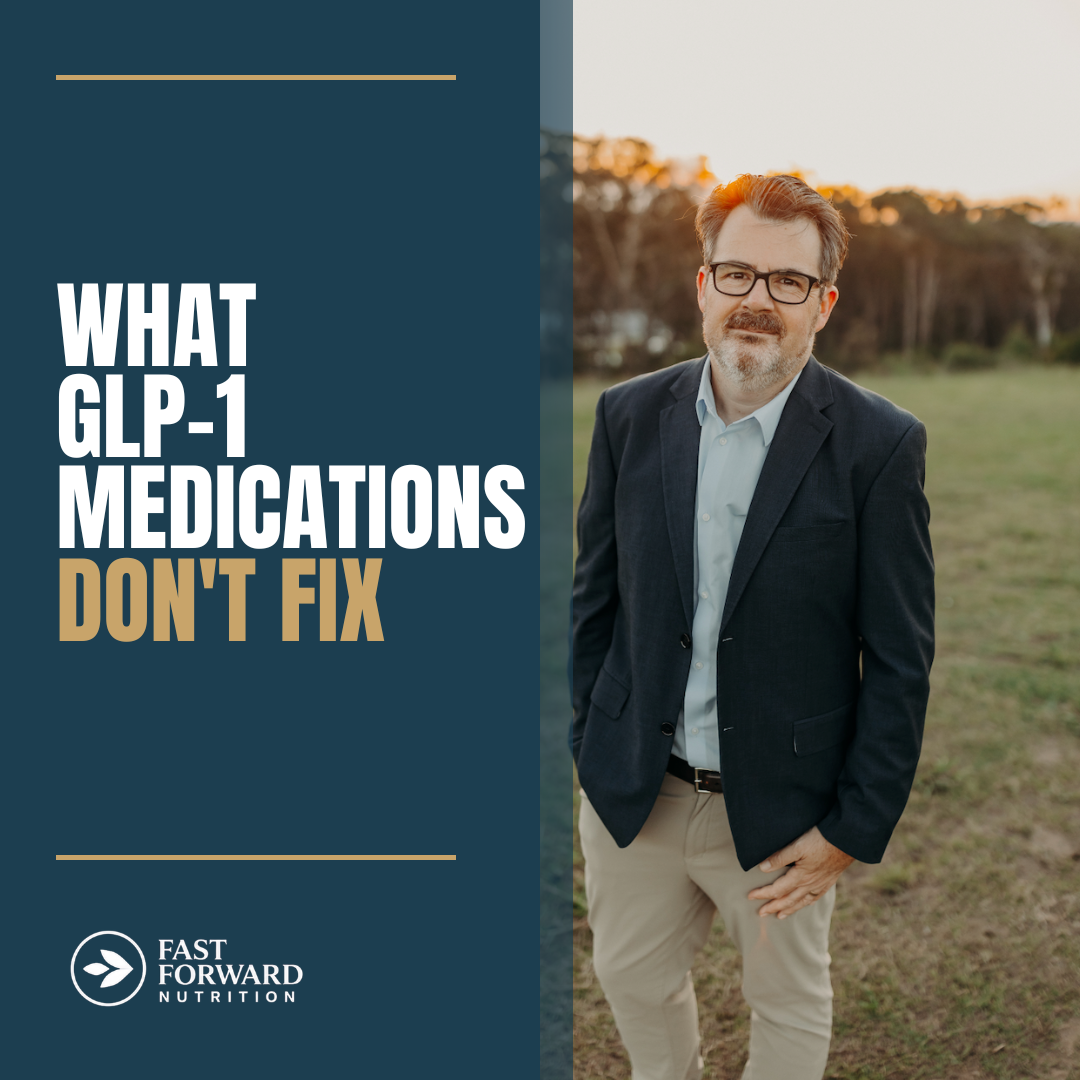
Food Noise and Clinical Nutrition
You know what to do. So why is food still taking up so much space?
You can know what you planned to eat. Know what works for you. Know what you meant to do.
And still find yourself thinking about food, negotiating with yourself, or doing something completely different.
People increasingly call that experience food noise.
The name can be useful. But the name doesn’t tell us what’s driving yours.
Food noise in real life
Does any of this sound familiar?
Food noise can show up in ordinary moments.
-

It wasn’t on my mind.
Then I walked through here.
-

I wasn’t even hungry.
Then I saw the sign.
-

I only came in for a few things.
Now everything is competing for my attention.
-

I wasn’t thinking about food.
Then someone ordered chips for the table.
The moment can look familiar. The reason behind it may not be.
Three ways to take the next step
Where would you like to start?
There’s more than one way to make sense of food noise.
01
Build your understanding
Understand it
Start with a clear explanation of what people mean by food noise, what can shape the experience, and why it isn’t always the same thing as hunger.
02
Get practical support
Explore yours
Take about 90 seconds to reflect on how food noise is showing up for you. No score, no judgement and no email required to see your result.
About 90 seconds · No email required
03
Get personalised guidance
Talk with Jon
If you’ve got questions, you’re unsure which lever matters, or you want to understand how clinical nutrition could help, we can talk it through.
15 minutes · online · Australia-wide
Just have a quick question?
Ask the Online Assistant
Prefer to contact Jon directly? Contact Jon
 Fast Forward Nutrition
Nutrition Navigator
Fast Forward Nutrition
Nutrition Navigator
Not sure where to begin?
Answer three quick questions and I’ll point you to the best free tool, guide or read to start with — no email needed to see your results.
THE WIDER PICTURE
Food noise rarely happens in isolation.
What you notice around food can sit alongside appetite, eating patterns, sleep, stress, metabolic health, hormones, medications and the realities of everyday life.
Clinical assessment helps us work out what deserves attention first — without assuming everything needs fixing.
-
Hunger and thinking about food aren’t necessarily the same thing. Appetite, cravings, fullness and persistent thoughts about food can overlap — but they aren’t interchangeable.
-
What and when you eat can influence hunger, appetite and how often food comes back into your thoughts. Meal regularity, enough food overall, protein, fibre and meal composition can all shape the experience.
-
Insulin resistance and other aspects of metabolic health can influence appetite, energy and eating patterns. They don’t explain every experience of food noise, but they can be an important part of the clinical picture.
-
Perimenopause, menopause and men’s midlife can change sleep, appetite, body composition and the context around eating. Hormones may be part of the picture without being the whole explanation.
-
Poor sleep, stress and fatigue can change appetite, food choices and how much mental space food takes up. Sometimes the context around eating matters as much as the food itself.
-
Medications can change appetite, hunger and food thoughts — sometimes substantially. GLP-1 medicines are an obvious example: quieter appetite or food noise changes the nutrition problem, but doesn’t make nutrition irrelevant.
-
Routines, past dieting, learned food rules and the environment around you can all shape when food grabs your attention. Supermarkets, advertising, social situations and familiar cues can bring food into your thoughts even when hunger wasn’t what started it.
-
Clearer eating windows can reduce grazing and repeated food decisions for some people. For others, longer gaps can increase hunger or food preoccupation. The question is whether the structure helps you — and fits your health and circumstances.
How I work
Understanding is only useful if it changes what happens next.
The FORWARD Method™ helps us work out what matters for you.
Before we try to quiet it, let’s understand it.
-
Step 01: Understand it
Understand what’s driving yours
Food noise can look the same from the outside and have very different drivers. We look at hunger, appetite, cravings and food thoughts alongside your eating patterns, sleep, stress, hormones, medications and food environment.
The aim is to understand what’s shaping your food noise — not just give it a name.
-
Step 02: Unravel it
Work out which levers matter
Once we know what’s contributing, we build practical structure around it — regular meals, enough food overall, protein and fibre, sleep, stress or the cues around you, where they’re relevant.
Without adding another layer of rules or restriction.
-
Step 03: Move forward
Loosen the hold food has
The goal isn’t to silence every food thought or rely on willpower. It’s to help you recognise your own patterns, respond with more confidence and spend less of your day negotiating with food.



Lived experience + clinical training
I know what it’s like when food takes up too much headspace.
I’ve experienced what it’s like when food keeps occupying your attention — thinking about it, planning around it, chasing it — long after you’ve eaten.
But one of the most valuable things I gained wasn’t measured on the scale.
It was understanding.
Understanding how to step back and work out what was actually happening. Which things mattered. Which didn’t. What I could change — and what I didn’t need to spend my energy worrying about.
And with that understanding came something I value even more: weight and food no longer occupy the same mental space in my life that they once did.
My experience isn’t your explanation.
What worked for me won’t automatically work for you. Your biology, health, circumstances and life are different.
That’s why I studied Clinical Nutrition.
What drove my food noise isn’t necessarily what drives yours. The clinical work is understanding what’s shaping yours — and helping you build what works.
BHSc Clinical Nutrition · Certified Practising Nutritionist (AARPN) · ATMS · Australia-wide telehealth
Your FORWARD Plan
Practical recommendations to take away and use.
You’ll receive a written, personalised prescription with dietary and lifestyle recommendations, and an agreed supplementation prescription where appropriate.
We focus on what matters now. Recommendations and resources are selected for your needs.
Receive clear priorities
Know what to focus on over the coming weeks.
Know what and how much to eat
Relevant food targets translated into foods, serves and meals.
Choose food in everyday situations
Practical supermarket, café, takeaway and restaurant choices.
Prepare and organise food
Meal preparation and routines that fit your everyday life.
Understand your recommendations
Know why a change matters and how to introduce it.
Monitor your response and adjust
Agree what to notice, then review what works and what needs changing.
How we put it into practice
Your written prescription
Clear priorities and practical instructions to take away and use in everyday life.
Agreed supplementation
Where appropriate, clear instructions on what to take, how much, when and what we’ll review.
Practical take-home guides
Relevant FFN Playbooks explain your recommendations and provide food ideas and examples.
Review together
At your follow-up, we assess your response, troubleshoot difficulties and adjust your prescription.
You don’t need to change everything at once.

What if the noise didn’t get the final say?
Same sign. It just doesn’t have the hold it once did.
There’s plenty of advice. The work is understanding what’s driving the noise.
Hunger, cravings, habits, restriction, sleep, stress, your food environment — food noise can have more than one influence. The starting point is understanding what may be contributing to yours.
Understand it
Look beyond willpower and see what may be influencing your appetite, thoughts and urges around food.
Unravel it
Work out what deserves attention first — without adding another layer of rules or restriction.
Move forward
Build practical changes around your appetite, nutrition, health and real life.
Have a question before you book? Contact Jon →
New to Fast Forward Nutrition?
There’s more here to explore.
Food noise rarely comes down to one thing. I’ve built free guides, tools and practical resources to help you get familiar with the different parts of the picture.
Take your time. Stay connected. When you’re ready to bring the pieces together around you, I’ll be here to help.
Want to understand the noise better?
Food Noise: A Starting Point
What food noise can look like, what can influence it, and where to start making sense of your own.

Nine pages. Referenced. Read it in your own time.
Curious about fasting?
Fasting: A Starting Point
What fasting is, what it can change, and the part almost nobody talks about.
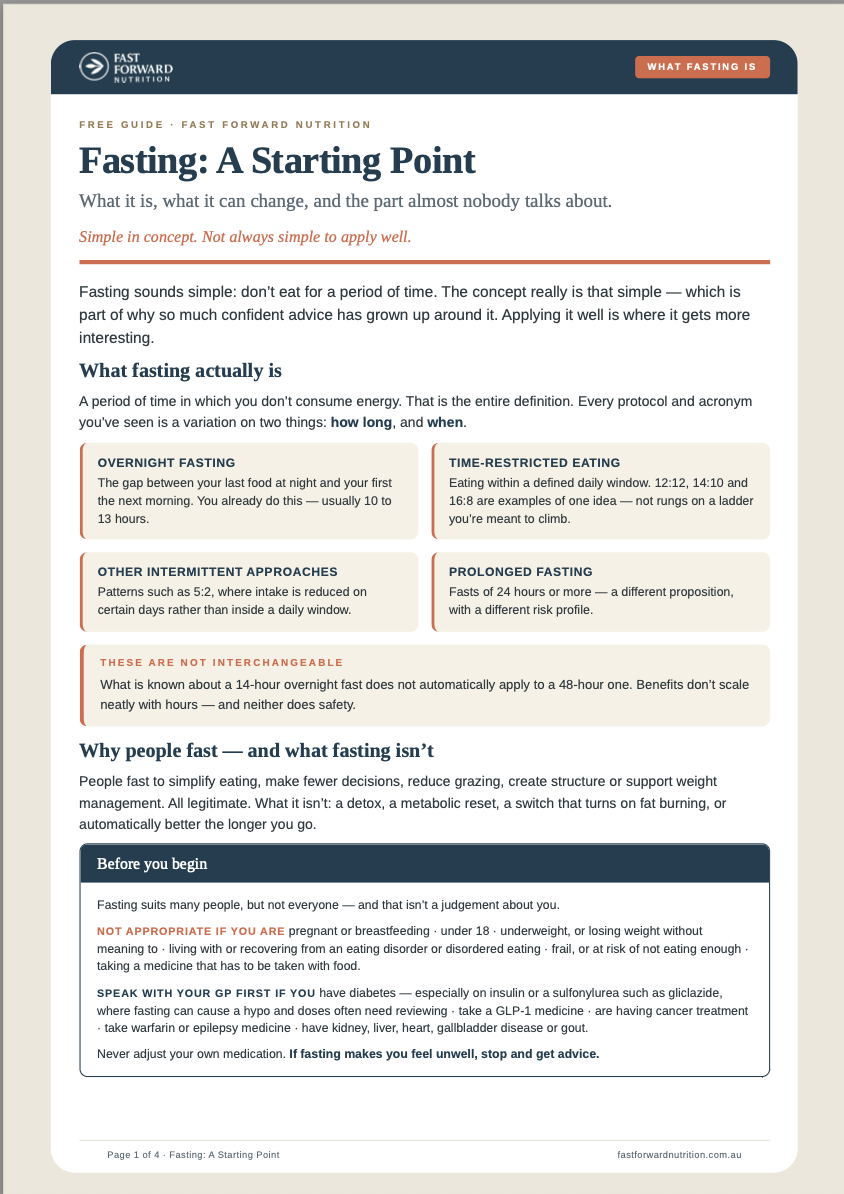
Four pages. Referenced. Read it in your own time.
Explore more resources
Maybe there’s one thing you want to ask before you go.
Contact Jon →
FROM THE BLOG
Learn your metabolism
Stop guessing