Menopause Support Through Clinical Nutrition
Menopause rarely shows up as one thing.
Maybe you’re sleeping differently. Your clothes fit differently. You’re reaching for more coffee, thinking about food more often, feeling less strong, or wondering why what used to work doesn’t seem to anymore.
And then everybody has an answer.
The challenge isn’t finding menopause advice. It’s working out what deserves your attention first.
Understanding menopause
Menopause can change more than one thing at once.
Hormonal changes can influence many areas of health. The experience is different for everyone, and not every change in midlife is caused by menopause.
-
01
Hormonal change changes the context
Estrogen and progesterone change across the menopause transition. This can affect sleep, temperature regulation, mood, body composition, muscle, appetite, digestion and metabolic health.
These changes can occur together, not one at a time.
-
02
Symptoms can overlap
Fatigue, sleep disruption, appetite changes, digestive symptoms, changes in weight or body composition and mood don’t necessarily have one cause. Health history, medications, stress, nutrition and other conditions can all be part of the picture.
That’s why context matters.
-
03
You don’t need to tackle everything at once
When several things shift together, pushing harder on food or exercise doesn’t necessarily tell you what deserves attention. The useful starting point is working out what has changed, what matters most, and what may need your GP’s input.
A more considered approach can make things clearer and more manageable.
How I work
Menopause changes the context.
The FORWARD Method™ navigates the path.
What if the answer isn’t pushing harder?
-
Step 01: Understand it
Understand what’s changed
Sleep, energy, appetite, strength, digestion, body composition and metabolic health can all shift at once. We look at them together — alongside your health history, medications, nutrition and real life — to understand what deserves attention first, and what may need your GP’s input.
-
Step 02: Unravel it
Turn understanding into practical structure
Knowing what may be changing is different from knowing what to do about it. We build practical structure around food, protein, muscle, fibre, sleep and recovery — based on what actually needs support for you.
-
Step 03: Move forward
Build confidence, not dependency
Support can reduce as your knowledge and confidence grow. The goal is for you to feel capable of making routine food and health decisions more independently.
Meet Jon
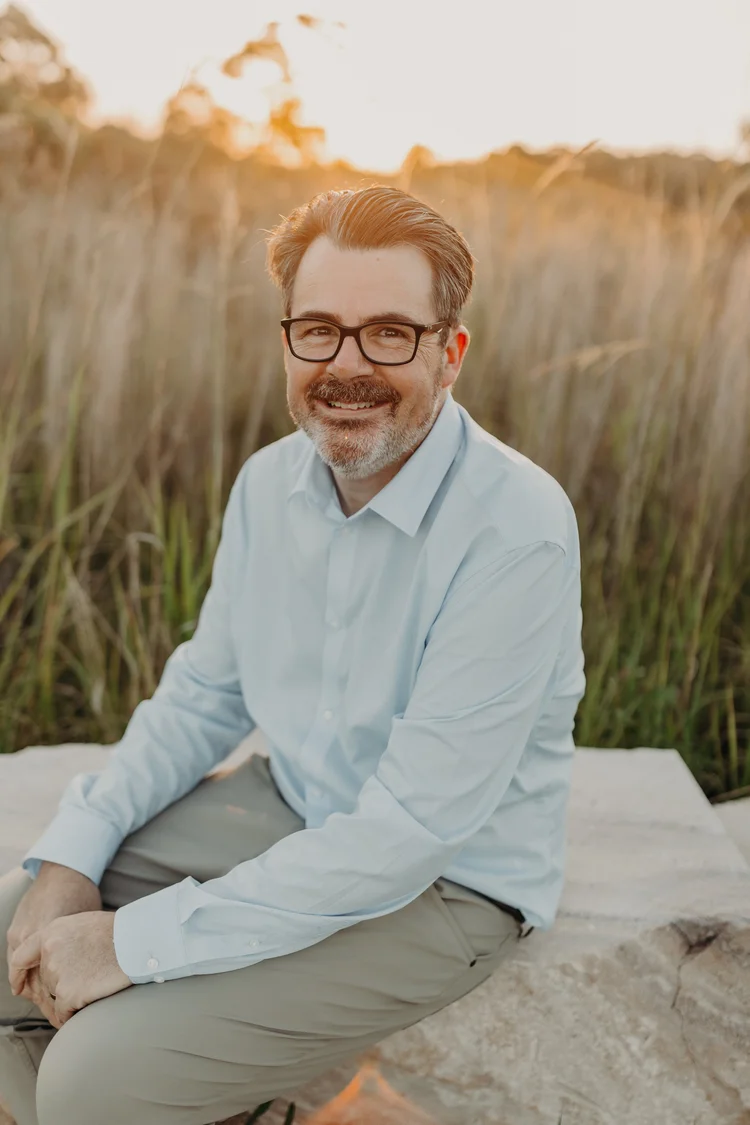
Hi, I’m Jon.
I help busy adults get unstuck.
I’m a Certified Practising Nutritionist (AARPN) and the founder of Fast Forward Nutrition. I built this practice from a mix of lived transformation experience and formal clinical training, because I kept seeing the same issue: people weren’t failing because they “didn’t want it enough.” They were failing because they were trying to apply generic advice to a body and lifestyle that needed a more specific approach.
My work is grounded in evidence-informed practice, ethical transparency, and a structured process that respects real life — work stress, parenting demands, and the messy middle where motivation disappears.
My aim is to meet you where you are, simplify nutrition in a noisy digital landscape, and help you build skills you can keep using long after our work together.
Menopause is not my lived experience. My role is to understand the broader nutrition picture, be honest about where nutrition can help, and collaborate with your GP or other health professional when appropriate.
I also share practical nutrition commentary, supermarket reviews and evidence informed guidance on Real Life Nutrition with Jon on YouTube.
Your FORWARD Plan
Practical recommendations to take away and use.
You’ll receive a written, personalised prescription with dietary and lifestyle recommendations, and an agreed supplementation prescription where appropriate.
We focus on what matters now. Recommendations and resources are selected for your needs.
Receive clear priorities
Know what to focus on over the coming weeks.
Know what and how much to eat
Relevant food targets translated into foods, serves and meals.
Choose food in everyday situations
Practical supermarket, café, takeaway and restaurant choices.
Prepare and organise food
Meal preparation and routines that fit your everyday life.
Understand your recommendations
Know why a change matters and how to introduce it.
Monitor your response and adjust
Agree what to notice, then review what works and what needs changing.
How we put it into practice
Your written prescription
Clear priorities and practical instructions to take away and use in everyday life.
Agreed supplementation
Where appropriate, clear instructions on what to take, how much, when and what we’ll review.
Practical take-home guides
Relevant FFN Playbooks explain your recommendations and provide food ideas and examples.
Review together
At your follow-up, we assess your response, troubleshoot difficulties and adjust your prescription.
You don’t need to change everything at once.
WHAT I HELP WITH
Menopause rarely shows up
as one symptom.
Sleep, energy, appetite, strength, digestion and weight can all shift at the same time. My approach looks at the broader nutrition picture, then prioritises what deserves attention first.
-
Changes in weight, waist measurement or body composition despite eating much as you always have. We look beyond calories alone to understand what else may have changed.
-
Difficulty falling asleep, waking often, early waking, or feeling unrefreshed — especially when stress is high.
-
Energy dips, brain fog, needing multiple coffees to function, and feeling flat or depleted by the end of the day.
-
Strong cravings after dinner, emotional eating under pressure, and a sense of losing control when the day has been demanding.
-
Maintaining muscle becomes increasingly important during and after menopause. We look at protein intake, meal structure, resistance activity and whether you are eating enough to support strength and recovery.
-
Bloating, constipation and changes in food tolerance can become more noticeable. We consider fibre, fluids, meal patterns and individual triggers without applying unnecessary restriction.
-
Changes in cholesterol, blood pressure, blood glucose and body composition can influence cardiovascular health after menopause. Nutrition can support these areas alongside appropriate GP care and monitoring.
-
Nutrition can sit alongside menopause hormone therapy and other medical care. I will not advise you to begin, stop or change prescribed treatment, but I can collaborate with your GP or other health professionals when appropriate.
Three ways to take the next step
Choose the way you want to begin
Choose the level of support that suits where you are now.
01
Find your direction
Find my
starting point
Answer four short questions about what you are noticing. Your result will direct you towards information and free resources based on your answers.
No email required for your result.
02
Build your understanding
Receive
the free guide
Prefer to understand the bigger picture? Enter your first name and email and I’ll send you the Menopause Starting Point Guide.
You do not need to complete the questions first.
Sent by email.
03
Get personalised guidance
Talk with Jon
Book a free 15-minute video call to ask questions and understand where clinical nutrition may fit.
Meet Jon and learn about his clinical approach →
No obligation to book afterwards.
15 minutes · online
Just have a quick question?
Ask the Online Assistant
Prefer to contact Jon directly? Contact Jon

Confidence replaces confusion.
Moving forward becomes possible
- with the right support.
There’s plenty of menopause advice. The work is knowing what deserves your attention first.
Sleep, appetite, body composition, energy and health can all shift through midlife. You don’t need to tackle everything at once.
Understand it
See what’s changed in the context of your symptoms, health, nutrition and real life.
Unravel it
Work out what deserves attention first — and what doesn’t need fixing.
Move forward
Build practical next steps around your health, priorities and stage of life.
Have a question before you book? Contact Jon →
Another way to start
Curious about intermittent fasting?
Fasting FORWARD is a 12-week program with Jon, including support through perimenopause and menopause. We’ll explore whether fasting suits you at your Initial Consultation.
New to Fast Forward Nutrition?
There’s more here to explore.
Midlife brings a lot to make sense of. I’ve built free guides, tools and real-life resources to help you get familiar with the different parts of the picture.
Take your time. Stay connected. When you’re ready to bring the pieces together around you, I’ll be here to help.
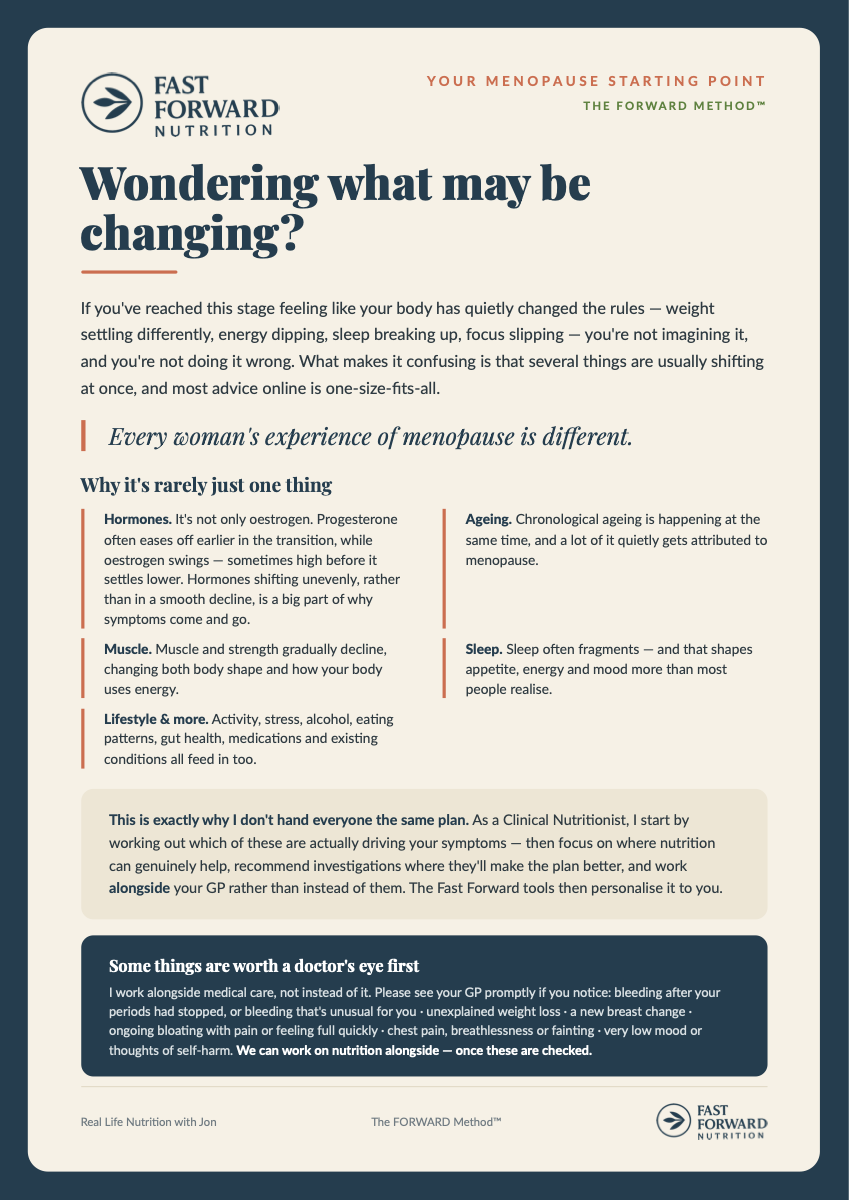
Menopause
Free 3-page guide
Why it’s rarely just one thing, where nutrition genuinely helps, and what’s worth a doctor’s eye first.
Free. Read it in your own time. Designed to work alongside your GP.
Explore more resources
Maybe there’s one thing you want to ask before you go.
Contact Jon →
FROM THE BLOG
Learn your metabolism
Stop guessing